
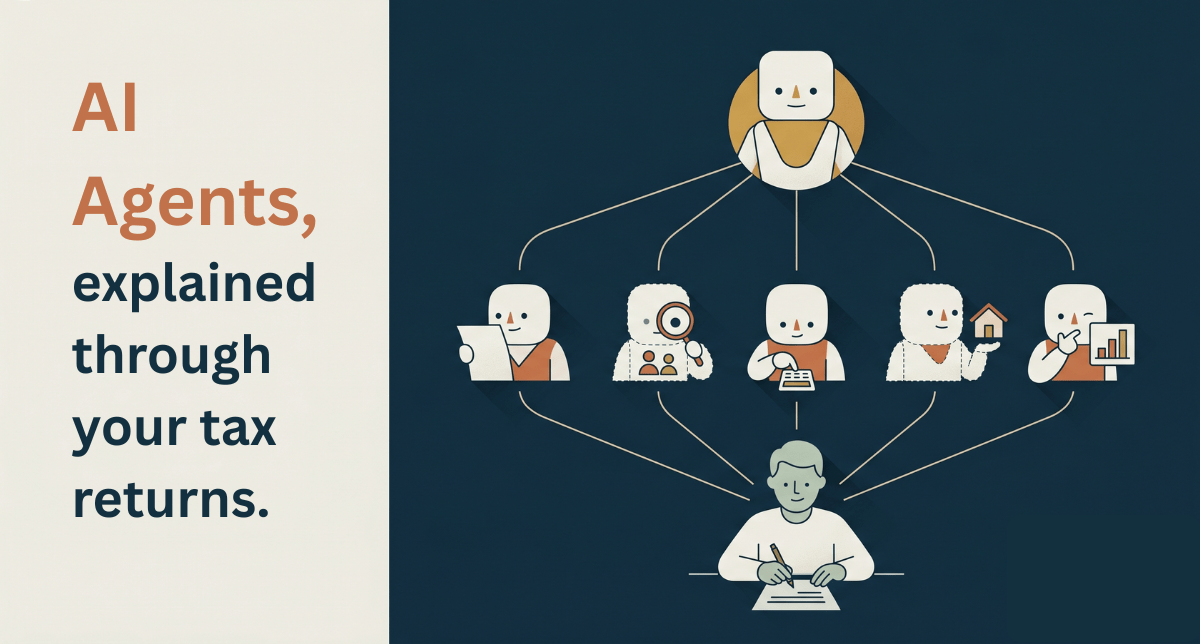
Everyone keeps saying “AI agents” like they’ve just found an auto-rickshaw that agreed to go by the meter. Let me explain what they actually are — no code, no jargon, promise.
Think of the most organised person you know. Faced with a big task, they don’t do it all themselves. They break it into smaller jobs and hand each one to the right specialist: one person gathers the documents, another checks the numbers, someone reviews it all, and the organiser stitches it together at the end.
That’s an AI agent setup. One “manager” (the orchestrator) and a handful of focused workers (the agents), each good at exactly one thing. Why split it up? Because a single AI trying to do everything is like the colleague who insists on doing the entire project alone — impressive for about a week, then tired and making mistakes. Give each agent one narrow job and the whole thing gets faster, cleaner, and much easier to trust. And the humans don’t disappear in any of this. The agents do the legwork; the person still makes the decisions that matter.
Let me make this real with something most of us quietly dread every July — filing an income tax return.
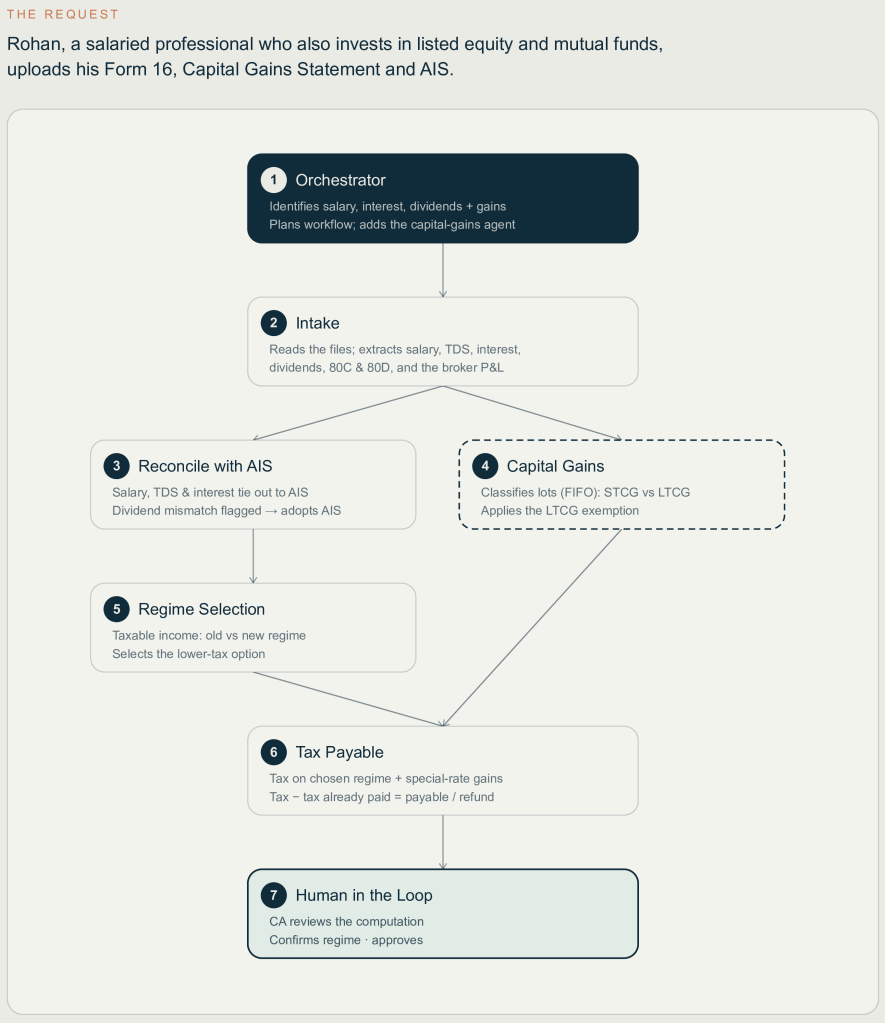
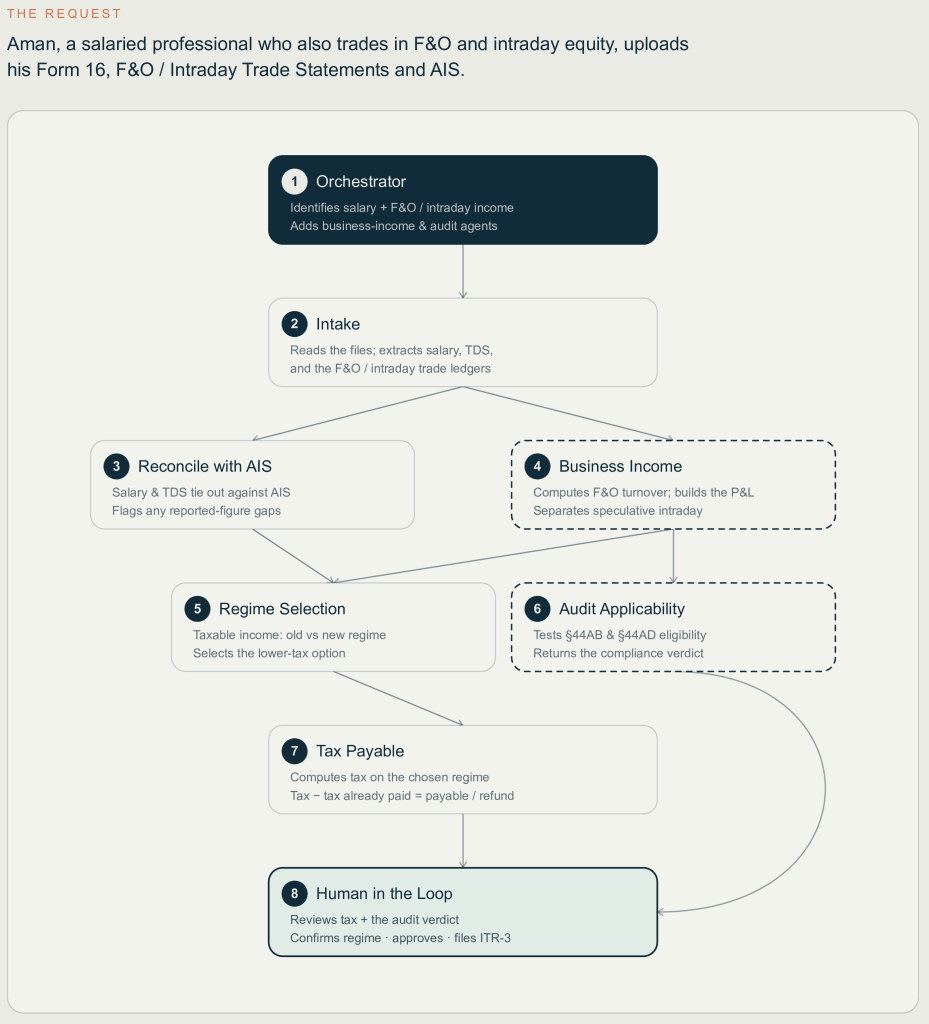
Here’s the team of agents I built for exactly that. One Orchestrator reads your case and decides who needs to work on it. Then a set of Core Agents that show up for every single filing: one reads your documents, one cross-checks everything against the tax department’s own records, one works out whether the old or new tax regime saves you more money, and one does the final maths. And finally a bench of Specialist Agents who only get called in when your situation actually needs them — sold some shares this year? The capital-gains specialist shows up. Rented out a flat? The house-property one steps in.
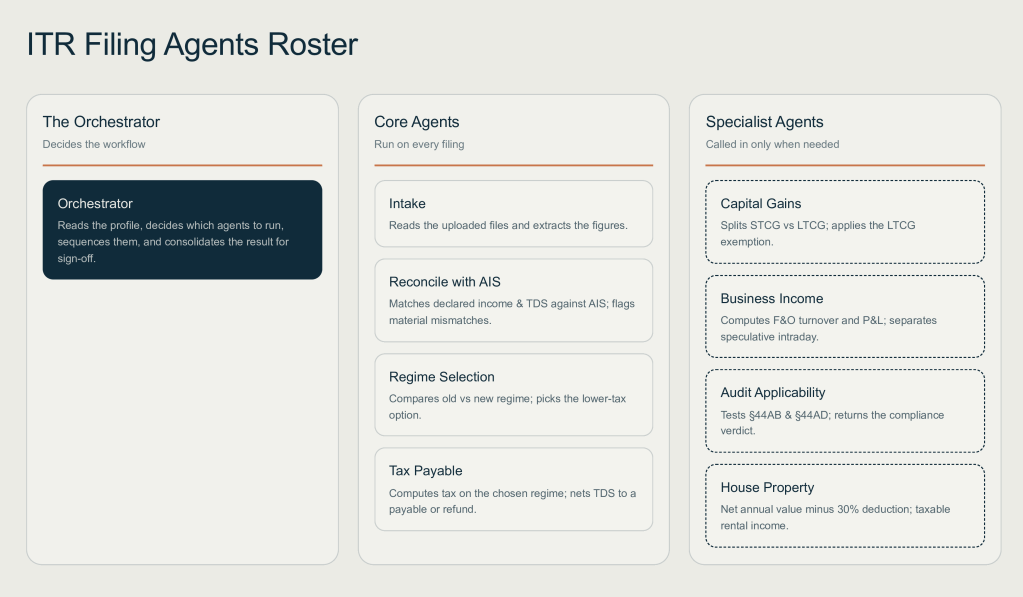
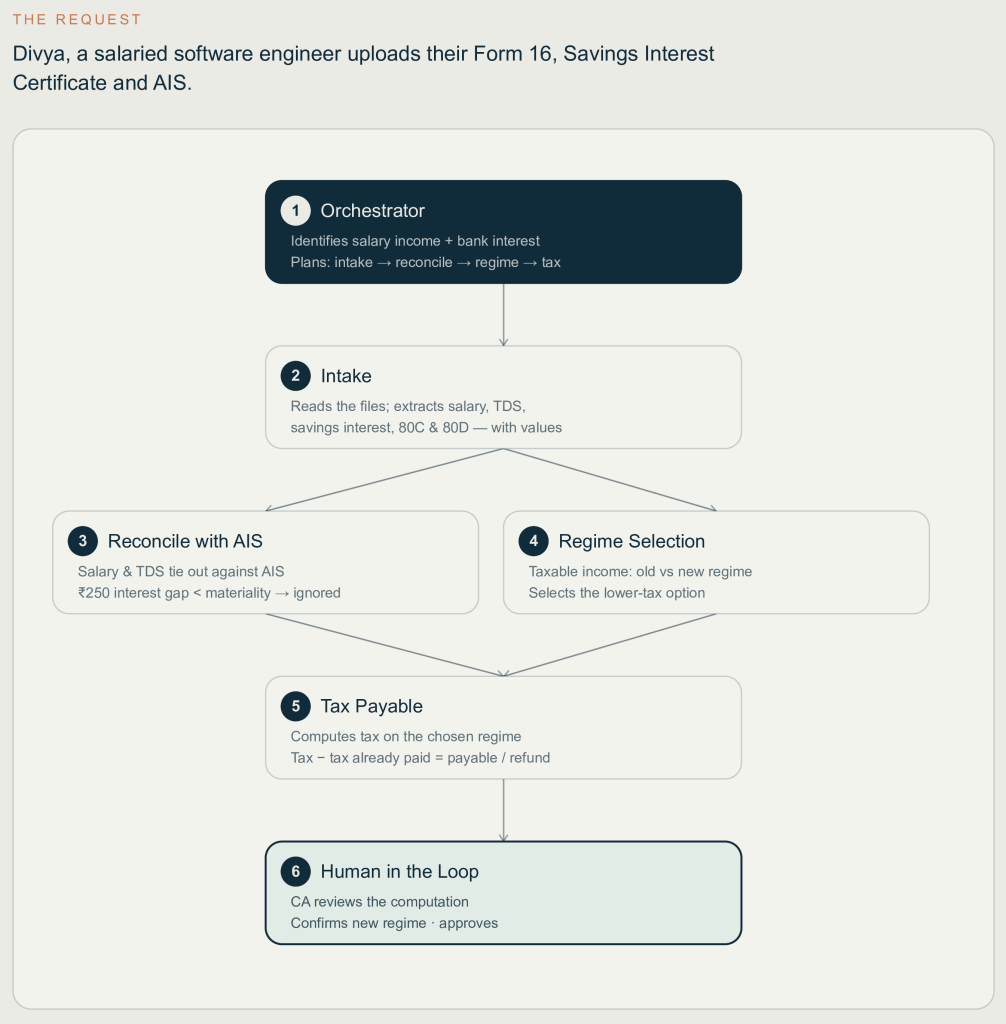
The neat part is the choreography. Some of it has to happen in order — you can’t check the numbers before someone has read the documents, and you can’t compute the final tax before the regime is picked. But plenty of it happens at the same time: while one agent is matching your salary to the records, another is busy sorting your share trades. They work in parallel where they can, in sequence where they must, and it all funnels back to the orchestrator — and then to a human — before anything is final.
The genuinely fun bit is watching the same team rearrange itself depending on who’s filing. Four quick cases:
Divya is salaried, plain and simple — just the core agents, in and out.
Rohan also invests in stocks, so the capital-gains specialist joins the team.
Aman trades futures and options, which counts as running a business — so two specialists turn up, including one that checks whether he even needs a tax audit.
Meera rents out a flat, so the house-property specialist comes in to handle the rental maths.
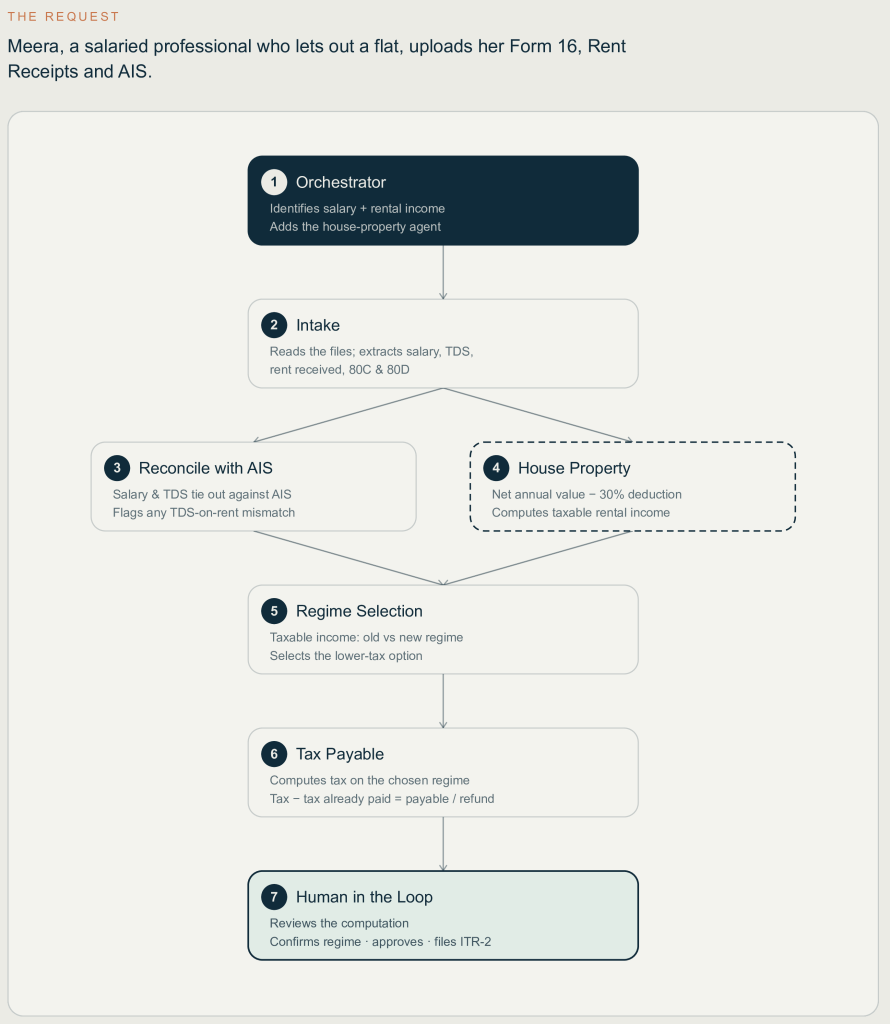
Same skeleton every time. Different specialists, summoned only when the income calls for them.
And here’s the thing none of this does: it does not file your taxes while you nap. The agents do the grind — the reading, the matching, the maths — and then hand it all to a human to review, approve and sign. The boring 80% gets automated. The judgement stays human.


